In this episode, Dr. Matt Chalmers breaks down the critical mistakes he’s seeing in GLP medication use—and why so many people are ending up looking and feeling worse despite losing weight. Drawing from his experience teaching over 500 medical doctors and med spa professionals, Dr. Chalmers reveals the hidden dangers of improper GLP protocols: nutrient deficiencies, muscle loss, hormonal imbalances, and the accelerated aging effect known as “Ozempic face.” But here’s the good news: when used correctly with proper supplementation, hormone management, and nutritional support, these medications can be powerful tools for fat loss while actually building muscle. In this conversation, he explains the biochemistry behind why your body isn’t running on calories—it’s running on chemistry—and exactly what you need to do if you’re considering or currently using GLPs to protect your long-term health and quality of life.
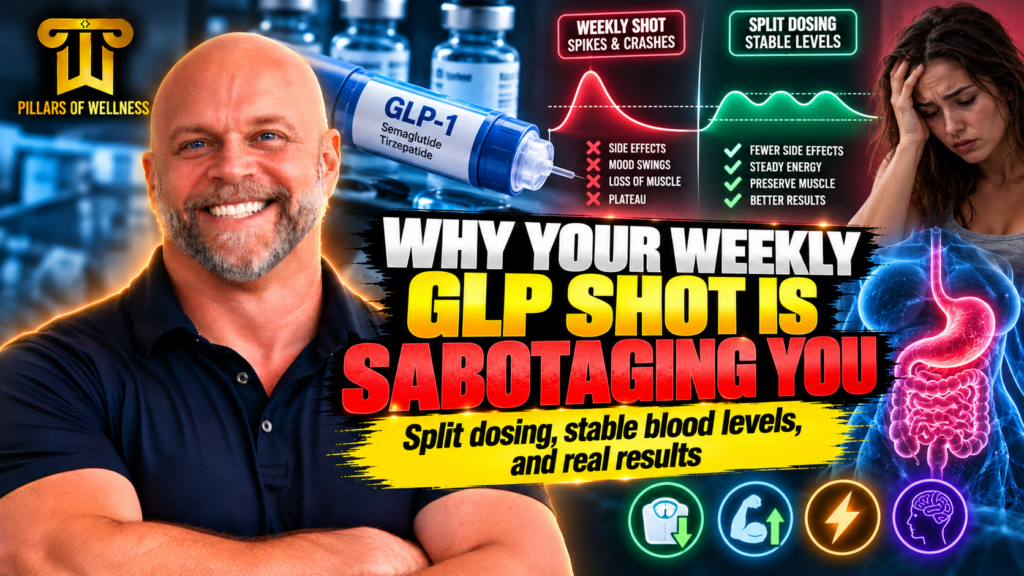
Dr. Chalmers emphasizes that one of the biggest issues with GLP medications is that people are taking them once a week, which creates problematic swings in drug levels. He explains the pharmacokinetics—these medications have a 6-7 day half-life, meaning levels fluctuate dramatically between doses, causing people to feel miserable on shot day but hungry the day before.
A critical theme is that patients using GLPs aren’t receiving proper nutritional guidance. The medications cause loose/watery stools, leading to dehydration and electrolyte loss. Without proper supplementation of electrolytes, minerals (selenium, zinc, magnesium, boron, iron, molybdenum), and B vitamins, the body breaks down muscle tissue to access needed nutrients.
Dr. Chalmers stresses that weight loss from GLPs often includes significant muscle tissue loss, which is harmful for long-term health, functional movement, and metabolic function. He argues that “losing fat” should be the goal, not just “losing weight.”
Testosterone levels are critical when using GLPs. He emphasizes that most people on these medications need testosterone supplementation to prevent hormonal imbalances and related issues like low energy and compromised thyroid function.
He discusses how improper GLP use leads to accelerated aging and a gaunt appearance (”Ozempic face”) due to nutrient depletion, collagen loss, and inadequate mineral management.
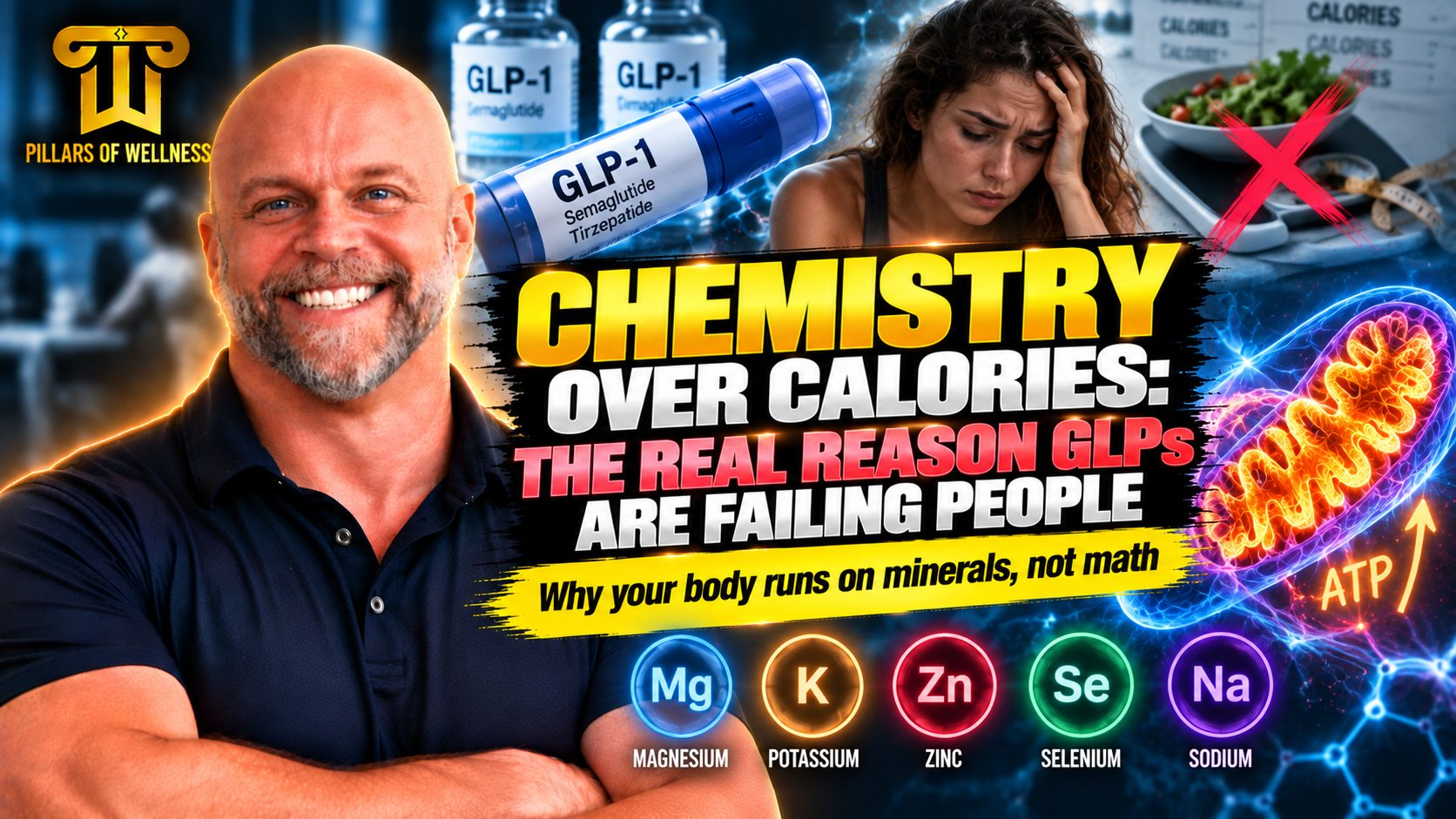
A recurring theme is that the body runs on chemistry (electrolytes, minerals, vitamins, ATP) rather than calories. He dismisses calorie-based approaches as fundamentally flawed.
When used correctly with proper supplementation, intermittent fasting, adequate protein intake, and hormone management, GLPs can actually support muscle gain while losing fat—something he demonstrates through client examples.
Dr. Chalmers criticizes medical schools for not teaching doctors about pharmacokinetics, nutrition, hormones, and biochemistry—leaving patients vulnerable to improper GLP management.
Check out PillarsOfWellness.com for Wellness updates! And ask me any questions you have at questions@chalmerswellness.com.
I answer them all and look forward to hearing from you.
Comment, like, and interact with other people on their wellness journey. Communities can make a difference. DrChalmers.substack.com
Check out my website: https://pillarsofwellness.com/
Social Channels: Instagram: https://www.instagram.com/drchalmers1/
Facebook: https://www.facebook.com/ChalmersWellness
LinkedIn: https://www.linkedin.com/in/matt-chalmers-a422803b/
Dr. Matt Chalmers
Disclaimer: This content is for informational purposes only. Before taking any action based on this information, you should first consult with your physician or health care provider. This information is not intended to be a substitute for professional medical advice, diagnosis, or treatment. Always seek the advice of your physician or other qualified health providers with any questions regarding a medical condition, your health, or wellness