UPCOMING ENGAGEMENT
Dr. Matt Chalmers, DC, CCCN, CCSP, will speak at NutriDyn’s Great Falls Conference.
Hosted by NutriDyn · April 24, 2027 · Sioux Falls, South Dakota
Dr. Chalmers sat down with NutriDyn to preview this talk. Watch the interview below.
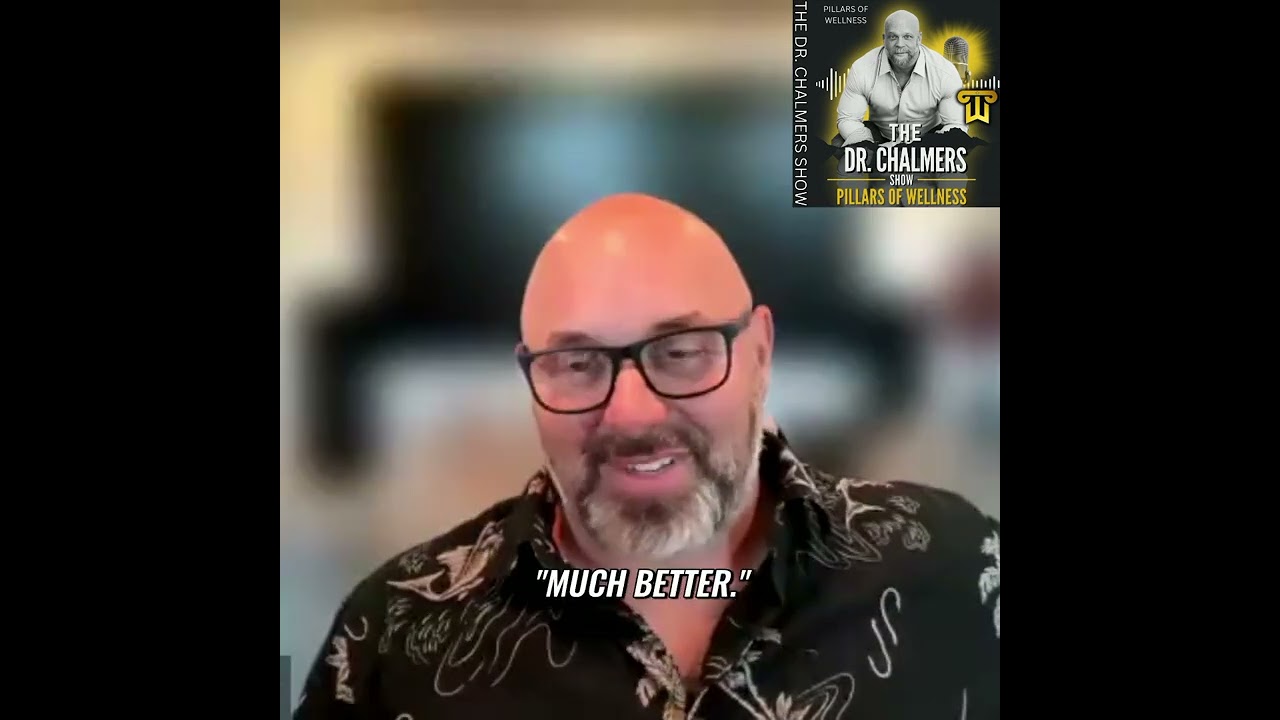
Dr. Matt Chalmers with Jonathan of NutriDyn, previewing his talk at the Great Falls Conference. Transcript generated from the video and lightly edited for readability.
Jonathan (NutriDyn): Hey, Dr. Matt. I’m Jonathan with NutriDyn. We’re super stoked to have you here for your upcoming lecture at the Great Falls Conference, which is going to happen on April 24th, 2027, in downtown Sioux Falls. We’ve had our Great Falls Conference for over 15 years now, so we’re excited to have you there. We have a big turnout, a lot of chiropractors, a lot of medical doctors.
We know you are the GLP-1 expert. I had the privilege of hearing you this last summer, and I was blown away. We hear so much about all the different peptides out there, and about the big three GLP-1s, and the insights you provided about dosing, which one to take, diet and hormones, this complete picture. I thought, “Okay, we have to have Dr. Matt come out and share this detailed information with all the docs.” So maybe you can talk about some of the highlights and some of the things you’re going to teach at the Great Falls Conference 2027.
Dr. Matt Chalmers: Absolutely. It’s funny, because in the bodybuilding and biohacking community we’ve been using these things for a long time, so they’re not as new to us as they are to everybody else. All the GLPs are going to be hormone therapy. And when you start looking at how to do hormone therapy well, there are a bunch of things people are doing wrong. The people who’ve been doing it for a long time have figured out how to put it together.
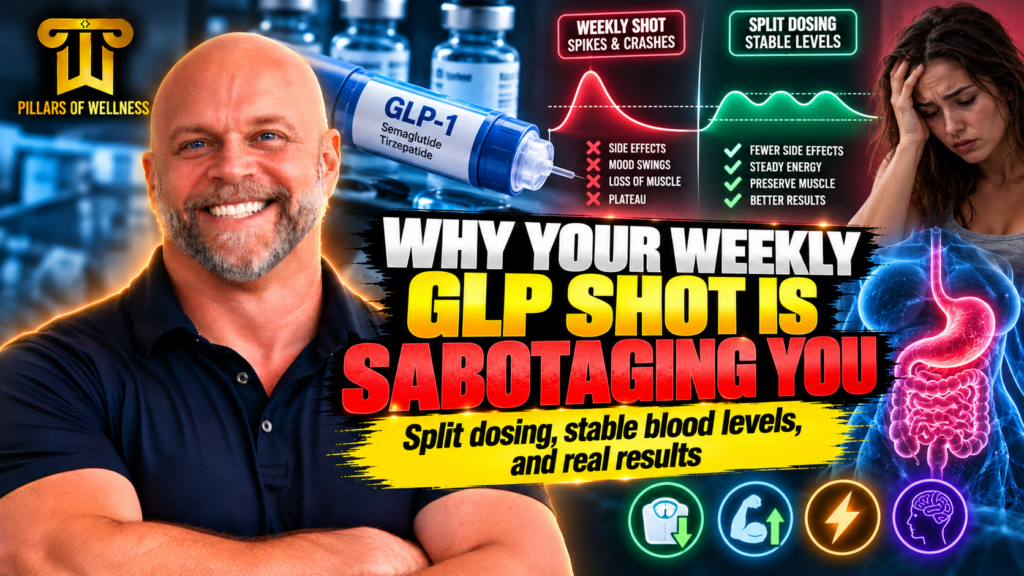
The big one is that they’re dosing these GLPs once a week, which is probably where I’d say 60 to 80% of the problems are coming from. It’s not the middle of the week when people have problems. It’s the first 24 to 48 hours after that next big dose goes in. So it’s easier to dose either three times a week or daily to avoid those issues. We can walk through the different dosing options, the upsides and downsides to each, and what you’re going to see.
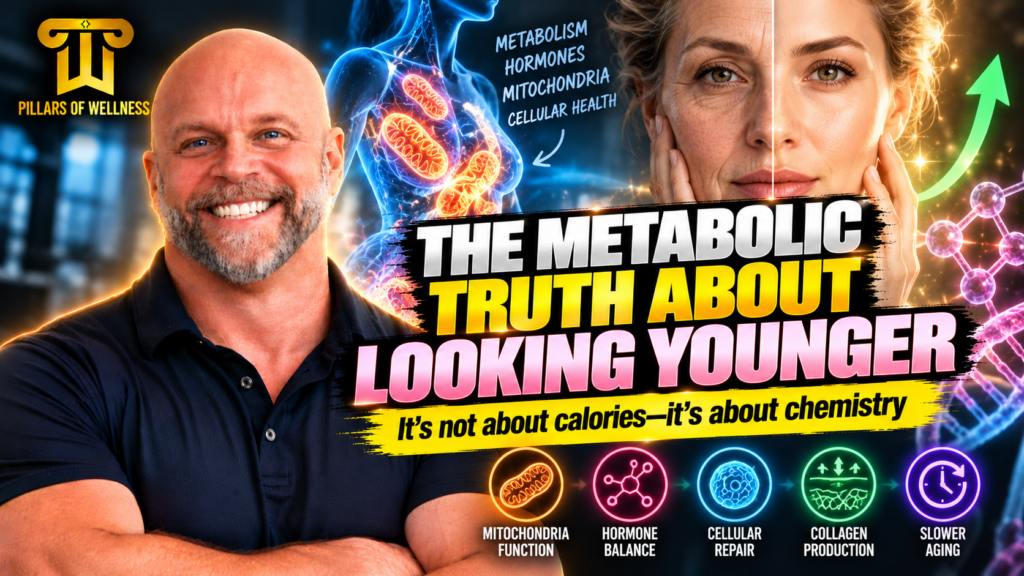
The other side of the reason we’re having so many problems with the GLPs is that people don’t recognize they have to fill the body with nutrients and get the body functional. One of the reasons we see so much muscle loss is that the body is starved for nutrients. Not energy. It’s not a calories thing; calories don’t really factor into this. Foods raise hormones, and those hormones tell the body what to do. But your body runs on nutrients. If you run out of selenium or zinc or magnesium or anything else, your body will break down muscle tissue to get at the nutrients stored there. Think of your muscles like a storage unit: if you start running out of stuff, you empty the storage unit. That’s one of the reasons people are losing so much muscle. If we can get the nutrition into people, that solves a big issue.
Something else we don’t usually think of as a nutrient is testosterone and the other hormones. Making sure hormones are where they’re supposed to be is a big piece of this too. So we go through the whole picture: your diet, your supplementation, your exercise, your sleep, your hormones, all of it. When you add those together, you get massive changes. If you tweak each one of those areas 5 or 10%, you get a major change. If you can tweak each one 20 or 30%, it’s a whole new person, and it’s super fun to do.
Chiropractors are typically more educated on nutrition, because we get nutrition and biochemistry in school and medical doctors often don’t. So you bring everybody back up to speed. People start listening to the physiology and say, “I remember all this. I remember mitochondria.” And you can show them how it all fits together. It’s fun to watch it click, because these are people who already have the education but haven’t had the dots connected for them. All of a sudden they have something they can take home and use in their clinic the next day, not only to improve their clinic financially but to radically change the health of their patients. That’s what makes life fun every day.
Jonathan (NutriDyn): Fantastic. No doubt docs right now are seeing a lot of patients taking peptides and putting things into their own hands. What are some of the negative things you’re seeing if we don’t fill in this whole picture? I know you already talked about nutrient deficiencies, but there’s a much bigger circle we have to include to make these things successful. Why do we need to learn this information, especially when we see patients already taking them?
Dr. Matt Chalmers: There are a couple of different problems we need to touch on. One is that people are getting these at home. They’re not talking to their doctors, and they just show up and say, “Hey, I’m taking stuff.” That’s problematic from a provider standpoint, because if you don’t know what your patients are doing, you can’t help them.
The bigger issue is this. People want to work out, so they’re working out, eating their protein, and taking a GLP, especially something like retatrutide. As their insulin resistance improves, you have to be really careful about their other medications. We see blood pressure get fixed fast, with major changes three or four weeks in. If someone was at 180 or 200 over 90 or 110 and they’re still on that blood pressure medication and you’re not watching it with them, their blood pressure may naturally come down to 140 over 80 or 90 while they’re still taking pills designed for 200 over 110. They’re going to pass out. The same thing happens as we fix insulin resistance while they’re still on metformin, Jardiance and the rest: now we run the risk of pushing blood sugar too low. So knowing what you need to watch, especially in the drug categories we need to start pulling people off of, is a big deal. If you give a patient a GLP and you’re not monitoring their sugars and blood pressure, they could very easily, very quickly be overdosed.
The other thing people aren’t talking about: say you have a woman who weighs 150 pounds and she loses 15 pounds, which isn’t difficult at all with these tools. She just lost 10% of her body weight. Now you have to readjust all of her drug dosages, including her GLP. One of the reasons we see that “Skeletor” look is that someone starts at, say, 165 pounds on a given dose, and as they lose weight, the dose never comes down. They’re doing well, doing well, doing well, and now they’re down 15 or 20 pounds, so the dose is effectively 10, 15 or 20% higher than it was at the start because their weight has changed. That increased effect is where we start seeing muscle tissue get eaten really quickly. Understanding the pharmacokinetics of these drugs is a big benefit to anyone who’s using them with patients, thinking about bringing them in, or whose patients are already using them. This is how we keep everybody healthy.
Jonathan (NutriDyn): Fantastic. You mentioned women’s health. Maybe you could share a little about your experience there. What kinds of cases have you treated, what benefits are women seeing, and what has brought you the most fulfillment working with them?
Dr. Matt Chalmers: When I wrote my first book, my editor was going through it and asked, “Why don’t you tell people you’re a women’s health specialist?” I said, “Because I’m not.” She said, “You do more for women than anybody I’ve ever met.” And I said, “That’s because nobody does anything for women. The bar is really low.” It’s not that I’m special; the bar is just low.
What we see is that our moms and our women have been decimated, hormonally, nutritionally, and stress-wise. A lot of these women have taken all of this on and are trying to shoulder it and muddle through, and it’s destroying them and their whole family. When we get the nutrients and everything else back in, the brain starts working better again.
One of the things I always tell people is that all psychological issues are metabolic issues. We’ve all seen this. If you’ve ever seen somebody who’s “hangry,” so hungry they got grumpy and tired, and then you feed them and restore their metabolic function, their emotional function comes back too. Once they eat, they’re happy and nice again. The same thing happens when your hormones are off, your nutrient levels are low, your exercise is down or your sleep is bad. Those things compound. Everyone knows that if they don’t get enough sleep, they can’t think or function. Imagine getting two good nights of sleep a week and the rest are bad. You’re going to be in a bad spot.
Just by restoring women’s hormones, we get a lot of women back. We start with testosterone, because this is one of those things people misunderstand: a woman’s primary hormone is testosterone, not estrogen. The physiological path starts with cholesterol, then pregnenolone, and women make testosterone and then aromatize it into estrogen. If they don’t have enough testosterone first, they won’t make enough estrogen. So we give women back their testosterone so they can have both.
When you raise testosterone back up, you get all the benefits: mental clarity, energy, sleep, sex drive, bone density, muscle mass and fat loss. And if you set it properly, it can dramatically improve orgasm function for women. When a woman gets her energy back, starts sleeping better, gets her sex drive back, and her orgasms are better than they’ve ever been, she usually wants to be intimate more often. When that happens, everyone in the family benefits. The husband is nicer, happier and more fun. As that intimacy rebuilds, and that part of a marriage is critical, everyone sees it. The kids see how much mom and dad love each other again. Friends ask, “Are you two going to counseling? What’s going on? You’re so lovey-dovey all of a sudden.” That’s so much fun to watch. We work with couples a lot, and the first visit they’ll sit straight up in their chairs. At the three-month mark they literally pull their chairs closer together so they can hold hands.
I always like to point it out: “So, how’s the sex drive?” She’ll say, “Oh, it’s better,” and the husband will say, “Oh, much better.”
Some of the other things we’ve been able to knock out, which has been really fun to be part of, are endometriosis, PCOS and bad PMS. It’s the most fun thing I’ve ever been part of. Women come in six, eight, ten weeks in and say, “You have no idea what it’s like to be curled up on the floor crying in pain two days out of every month for ten years,” and then it’s just gone. It didn’t just get better for a lot of these women; it’s gone. One woman, about ten weeks in, had just gone through her cycle. Her normal cramps were so bad she’d curl up on the floor. This time she said, “I can tell my muscles tighten up a little, but I wouldn’t even call it a cramp. It’s unbelievable.”
We’re not giving people drugs that block symptoms. We’re changing the metabolic function of the body back to the way it was originally designed to work. This isn’t covering up symptoms; it’s changing the root cause: the inflammation created by visceral fat, and the insulin resistance that disrupts everything in the uterus.
One of the big things we use for endometriosis and PCOS, and to a degree fibromyalgia, is myo-inositol. It’s technically a sugar. When the myo-inositol to D-chiro-inositol ratio changes in these women, you can pretty much predict the endometriosis and PCOS. By restoring insulin sensitivity, it’s much easier for the body to take in nutrients. When we talk about insulin resistance, we’re not just talking about insulin; we’re talking about GLUT4 function, which means nutrients moving in and out of the cell. If we increase nutrient flow into the cell and waste flow out of it, things get better.
I’ve been working with women for a long time, and nothing has fixed endometriosis and PCOS like some of these peptides. Ten weeks in, they’re saying, “I’m fixed. This is unbelievable.” And I say, “Stay on it a little longer. We’ll take 20 pounds off you, reset your hormones, and you’re going to feel better than you’ve ever felt in your life.” And they say, “Let’s go.”
Working with this every day, there are one or two major wins. I get to tell somebody, “You’re no longer diabetic.” Or someone tells me their sleep apnea is gone, or that they don’t need their meds anymore. A patient comes in on day one with a glucose of 220, and 10 or 12 weeks later it’s 85. Some patients check their own glucose and email me updates: “My glucose was 130 today. I haven’t seen 130 in ten years.” As a doctor, I get to share major wins with people at least once or twice a day. That’s why everybody got into this. Some people got into it for money, and this is a great way to increase your practice income, but all the docs I know say that at the end of the day, they’d almost do this for free if everybody got better. Being part of that is an amazing thing.
People are going to take away a lot of tools and tips on how to use this, because a lot of it isn’t the way people were taught. It’s the way we’ve been doing it in the biohacking, bodybuilding, fitness model and bikini model world for a long time. We’ve learned a ton that just hasn’t been taught. Unfortunately, until about the beginning of this year, medical doctors were taught that all hormone therapy caused cancer, which isn’t accurate. Synthetic hormone therapy was the problem: the synthetic pharmaceuticals, not the hormones themselves. When you understand how it’s done physiologically and how to put it together, that by itself is a massive change in people’s lives.
Then you add the next layer. Now that your testosterone is where it should be, your energy is where it should be. Now we fix your glycemic function so your metabolism works the way it’s supposed to. You lose the fat, the visceral fat, the inflammation, the sleep apnea. Now we’ve fixed the other half of it. Massive health changes, and it’s so much fun.
Jonathan (NutriDyn): It sounds so rewarding. Real quick, I’d like you to give the docs some good information. You talk about the three GLPs: semaglutide, which we think of as Ozempic; tirzepatide, Mounjaro; and retatrutide. Maybe you can give a brief highlight of all three. When would you use them, when wouldn’t you? Something we can learn now and then really get into at the seminar.
Dr. Matt Chalmers: Semaglutide and Ozempic were great. They were the first entry into this. With those, we’re looking at appetite suppression. You also get a reduction in addictive behavior, which is fantastic, and some slowing of gastric emptying, plus some effect on insulin release. That’s the GLP-1 alone.
When we add GIP, we’re looking at tirzepatide: GLP plus GIP. That radically changes the way your body uses insulin. It releases a bigger, stronger bolus, then shuts off. We’re also working on the receptors that respond to insulin. So now we have much better control over how insulin is released, how much is in the system, and how the body absorbs and uses it. We get both sides. Tirzepatide is a giant leap forward because of that GIP piece. We see a lot less nausea, better adherence, and insulin resistance coming down faster. It’s a great tool.
Retatrutide is basically tirzepatide plus glucagon. You get the GLP and GIP benefits, but glucagon is the natural hormone your body uses to tell itself to use fat as fuel. So now there’s a massive push to burn even more fat. Because it works primarily on the liver, we start burning off fatty liver and the visceral fat around the liver very quickly. When you do that, you radically change insulin resistance, inflammation and the way the body works, period.
Glucagon also inhibits insulin release, and here’s a quick wrinkle we’ll go through in more detail. Say you have a high-blood-sugar pattern: you’re eating too much, or you have sleep apnea, whatever it is. You build up insulin resistance, so the body has to produce more insulin. As that happens, stress goes up and we crave sugar more. Cortisol plus sugar builds fatty liver and visceral fat. Visceral fat is metabolically active and increases inflammatory cytokines like IL-6. Higher systemic inflammation holds insulin levels higher. So the insulin resistance created the visceral fat, and the visceral fat now drives more insulin resistance. We get into a spiral where things just get worse and worse. Add sleep apnea, spiking insulin 50 to 100 times a night, and it gets out of control.
With glucagon, we can pull insulin levels down while burning off the visceral fat and the fatty liver. We’re radically reducing the source of that inflammation while also helping manage its effects. Retatrutide is a spectacular tool.
The issue with retatrutide is that once we add glucagon, we have to recognize that gluconeogenesis is happening. We have higher use of fat and higher use of amino acids to make sugar, and we have to account for all of that. When we tell the body, “I need you to burn a lot more fat,” and this person hasn’t been burning fat for six months, five years, ten years, we have to recognize what process the body uses to burn fat. From the liver’s standpoint, we need a lot more bile.
If we ask the body to do different things and don’t supply the nutrients to do them, we’re going to have problems. This is where we see cholecystitis, sarcopenia and muscle loss, bone density loss, depression and all kinds of other things. For example, semaglutide really hits the dopamine receptor. If a patient is on semaglutide, you need to start asking how their day is going. If they don’t have joy in their day, if they’re not finding fun things in life, they might be dopamine deficient, and you need to change the dosage so you’re not causing depression. There’s a lot of this, and we’ll walk through all of it. Once you know the upsides and downsides of each of these, and the nutrients that prevent those problems, they’re really fun to work with.
Jonathan (NutriDyn): Fantastic. One of my lines is, “A confused mind always says no.” Could you speak to someone who knows very little about peptides coming to your seminar, and someone with moderate experience? Is there going to be value for both?
Dr. Matt Chalmers: Absolutely. We can always walk people through a structured way of using these in their clinic. If you’ve never used them before and you follow this path, you’re going to be pretty safe. I can show you all the upsides and downsides. You don’t have to be the person who understands exactly which biochemical pathway MOTS-c is using. If you’re a champion of cyclic AMP and AMPK, great, explain it to anybody who cares, which will be very few of your patients. But it’s important that you know it. So we’ll cover the basic function, how to use these in your practice tomorrow, and the safety measures around them, and then everything else.
I’m also finishing a book that will definitely be out by then, covering the vast majority of the hormones and all of the peptides. I think there are about 50 of them in the book, so you’ll be able to look up dosing, exactly what each compound is and exactly how it works in the body. However deep people want to go, we can go.
If you’re thinking, “I don’t want to go to this because I don’t know anything about peptides,” look, nobody knows anything about peptides unless they’ve been working with them. Unless you’ve been in the bodybuilding or biohacking community for the past decade, they’re new to everybody, which is why so many people are using them wrong. If you’re really up on this stuff, you’re going to have a good time. If you’ve heard of these but never used them in practice, you’re going to have a really good time too. I teach for my pharmacy, and I work with people who are already using these all the time. They’ll say, “That makes so much sense. I’m going to change the way I’m doing it.” If you’ve been doing it, you might pick up new methods. If you’ve never done it, you’ll get three different approaches: the way everybody’s talking about, the way I do it, and a hybrid, with the upsides and downsides of each.
And not just the downsides. For example, cholecystitis is a problem with one method, so here’s how to prevent it, including some lifestyle pieces. We’ve been using these peptides long enough that we know the vast majority of the problems you’re going to see. I can walk people through the ones you’ll see, how to see them coming, how to avoid them and how to fix them when they come. Those tools will be useful for everybody.
Jonathan (NutriDyn): Nice. It’s going to be a great event. How many years have you been in practice?
Dr. Matt Chalmers: I opened my practice in 2007, and we started doing hormone therapy around 2010. We’ve been doing hormones and peptides since then.
Jonathan (NutriDyn): You have a great history there. From my 27 years of experience, the changes you’re describing in people are huge, and that’s what everybody wants. Let me ask about the benefit to a practice. For a doc thinking about learning these techniques from you and getting really good at them, what can they expect? What are the joys and benefits, and how does it help the practice?
Dr. Matt Chalmers: I love being a chiropractor. Being a chiro is amazing, and this helps both chiropractors and medical doctors. I work with a lot of medical doctors, and whenever I meet a new MD, I joke, “You have to be careful hanging out with me, because I’m going to turn you into a functional medicine doctor.” They laugh, and six months later they say, “I signed up for my first course.”
A lot of the medical doctors we talk to say, “Insurance is terrible. I can’t stand working for the hospital. I want to help people, but I also want to be able to make a living.” Peptides are that link. We can do amazing things for patients’ health, and these therapies tie the patient to you, because you’re the one teaching them how to eat, how to exercise and all of the rest. You’re the first healthcare provider actually providing the things we know drive health.
As people lose fat, their insulin resistance and diabetes go away and they start feeling better, they tell all their friends. With referrals, you’re hoping your patients talk about you. When two friends haven’t seen each other in two months and one is 30 pounds down, the other asks, “What happened to you?” Or someone is in a bikini for the first time in five years, and people ask, “How did you do it? I want that change. Who do I need to see?” So from a referral standpoint, it’s much better. As a mostly cash service that people understand walking in the door, it’s a great option as well. But for the doctor’s own satisfaction, getting to actually fix things is amazing.
I’ve talked to so many docs who work for hospital systems and are miserable. I feel for them. I’ve told several of them, “You’ve been in practice for eight or ten years. You’ve built a big enough following. Why don’t you go out on your own and do the things that actually matter for health, like peptides and hormones?” As they start, they tell me, “I’m making more money, and I love going to work every day.”
Imagine every day, at least once or twice a day, you get to tell somebody they’re no longer diabetic, or hear somebody cry because their marriage is so much better. It’s not “You’ll be better next year.” We’ve seen major blood pressure issues resolve in three, four, five weeks. We’ve seen A1Cs in the sevens and eights come back down to the fives in three or four months. These changes are fast and massive, and people can feel them.
When I do a Zoom follow-up, the first thing I ask is, “Questions and comments?” I don’t love using weight, so I ask, “How many inches have you lost?” And they’ll say, “It’s been six weeks and I’ve lost two inches around my waist.” Great, let’s keep it up. It’s almost never “We’re having problems.” And when there is a problem, it’s usually, “Did you use 10 units? Oh, you used 30?” Every practitioner knows a patient who’s going to do that.
But every day is amazing, and the economics are great. If you need to add a cash component to your practice, this will help. If practice feels like you’re dealing with frustrations every day and never getting good reports, this is going to change your entire practice, because people are going to be happy and healthy and telling their friends about it. Even if you’re already making a lot of money and having a great time, it gets more fun, because if you’re a good doctor, you like people getting better. If your goal is to get people better and build a cash practice, this is where everybody needs to be looking. It’s what we’ve been missing in healthcare for the past 30 years.
Jonathan (NutriDyn): I can only assume it’s satisfying in every way possible.
Dr. Matt Chalmers: Super fun.
Jonathan (NutriDyn): Wonderful. Is there anything else you’d like the docs to know?
Dr. Matt Chalmers: We can get you all the information and help you put everything together. Some of the chiropractors I’ve been helping are in states where they can legally partner and build an MD–DC practice so they can bring all of this in. I can walk you through it, because we’ve helped a lot of people do that: the things to look out for and the things you need to do to get started. If you’re a chiropractor who really wants to do this but needs the legal structure, it’s not as hard to get as you think. Everything is hard the first time. Once you’ve helped 15 people through it, you know the pitfalls and what to look at.
After talks, people always come up and say, “I want to bring these into my practice, but I can’t because of legal risk.” For instance, with a properly set-up structure, the supervising MD and the chiropractor are protected. You might pay an MD a monthly fee and hire a nurse practitioner. As the chiropractor, you teach the physiology, which is completely legal, because hormones and peptides are physiological tools; you’re teaching physiology, not prescribing. Whenever a prescription is needed, your NP writes it. So if you’re a chiropractor who thinks, “I really want to do this but I can’t legally,” you can. It’s a matter of putting the structure together, and everyone is going to have a really good time putting this together.
Jonathan (NutriDyn): All right, I’m super stoked. Again, the conference is April 23rd and 24th, 2027, and you’ll be speaking on the 24th at the Great Falls Conference. We look forward to seeing you there, Dr. Matt.
Dr. Matt Chalmers: It’s going to be awesome. It’s going to be a good time.
Jonathan (NutriDyn): Thank you. We’ll see you soon. And I hope everyone listening will come see Dr. Matt. It’s going to be a treat. Everybody comes to our events, we try to have good food, and we get to see all the docs again. We’re going to have a great time. Thanks again. We look forward to seeing everybody really soon.
Dr. Matt Chalmers: Awesome. All right, perfect.
This interview reflects Dr. Chalmers’ clinical experience and is intended for healthcare practitioners. It is not medical or legal advice. Patients should work with a licensed provider before starting or changing any medication, hormone or peptide therapy.
Date
April 24, 2027
Location
Sioux Falls, South Dakota
Format
In-person
Host
NutriDyn
Session Title, Venue, Schedule and Registration
Coming soon. Check back here for full details.

Dr. Chalmers is the founder and Metabolic Wellness Director of Pillars of Wellness in Frisco, Texas. He has spent nearly twenty years treating metabolic, hormonal, and inflammatory problems. He is a TEDx speaker, the bestselling author of Pillars of Wellness, and the host of The Dr. Chalmers Show. National media outlets regularly call on him as an expert in weight-loss medications and peptide therapy.
This event is hosted by NutriDyn, a maker of clinical nutraceuticals sold only through practitioners.
NutriDyn Website:
nutridyn.com
Interested in having Dr. Matt Chalmers speak at your next event, conference, or professional gathering?