
UPCOMING ENGAGEMENT · 6 CE HOURS APPLIED FOR
What Your Patients Are Missing: a one-day course on muscle, nutrients, and GLP-1 medications with Dr. Matt Chalmers, DC, CCCN, CCSP and Dr. Nicole Y. Gesik, DO.
Hosted by NutriDyn · Saturday, February 20, 2027 · 8:00 AM – 3:00 PM (HST) · Courtyard King Kamehameha’s Kona Beach Hotel, Kailua-Kona, HI
Register Now at nutridyn.com/ghc27

Two doctors, one idea: find what is missing, feed the tissue, and protect the muscle.
Some drugs ask the body to do a job it does not have the parts for. When those parts are missing, the patient stalls, and it looks like a side effect or like the treatment simply failed. That gap is what this day is about.
In the morning, Dr. Matt Chalmers covers the GLP-1 medications. Many of the problems patients report are not really side effects at all; they are nutrient deficiencies the drug itself created. He works through the effects organ by organ, and then gives you a daily support plan and a lab schedule you can put to use on Monday.
After lunch, Dr. Nicole Gesik explains why some patients stop improving even when the diagnosis is right and the care is appropriate. She shows you what the body was missing, and how to replace it.
7:30–8:00 AM · Registration and Coffee
8:00–9:00 AM · How These Medications Affect Each Organ
9:00–10:00 AM · Why Patients Lose Muscle
10:00–10:15 AM · Break
10:15–11:00 AM · The Daily Plan and the Lab Schedule
11:00 AM–12:00 PM · Lunch Served
12:00–1:00 PM · Functional Medicine Approaches to Neuromuscular Health
1:00–2:00 PM · Modulating Neuromuscular Function Through Biochemical and Biophysical Optimization
2:00–2:15 PM · Break
2:15–3:00 PM · Clinical Application for Neuromuscular Phenotypes
Date
Saturday, February 20, 2027
Time
8:00 AM – 3:00 PM (HST) · Registration and coffee from 7:30 AM
Format
In-person, one-day course
Host
NutriDyn
Audience
Practitioners, clinics, and students/staff
Continuing Education
6 CEs (applied for)
| Registration | Before Jan 20* | After Jan 20 |
|---|---|---|
| Practitioners | $195 | $215 |
| Whole Clinic | — | $279 |
| Student/Staff | $85 | $99 |
*Early bird registration must be completed by Jan 20.
Register online at www.nutridyn.com/ghc27
NutriDyn has applied for 6 CE hours for doctors of chiropractic in MN, SD, HI, ND, and AZ. Some restrictions may apply. Check with your state licensing board about general CE requirements, or if these specific CEs can be applied to your practice under a different credential.
75-5660 Palani Road
Kailua-Kona, HI 96740
Phone: 1.808.329.2911
Nestled in the heart of downtown Kona, the Courtyard King Kamehameha’s Kona Beach Hotel is situated on a white-sand beach with direct access to many water activities, including catamaran tours, parasailing, onsite water sport rentals, and cabana and daybed rentals. In addition, the Big Island hotel is near dozens of shops, restaurants, and local artisans.
Courtyard King Kamehameha's Kona Beach Hotel, 75-5660 Palani Road, Kailua-Kona, HI 96740

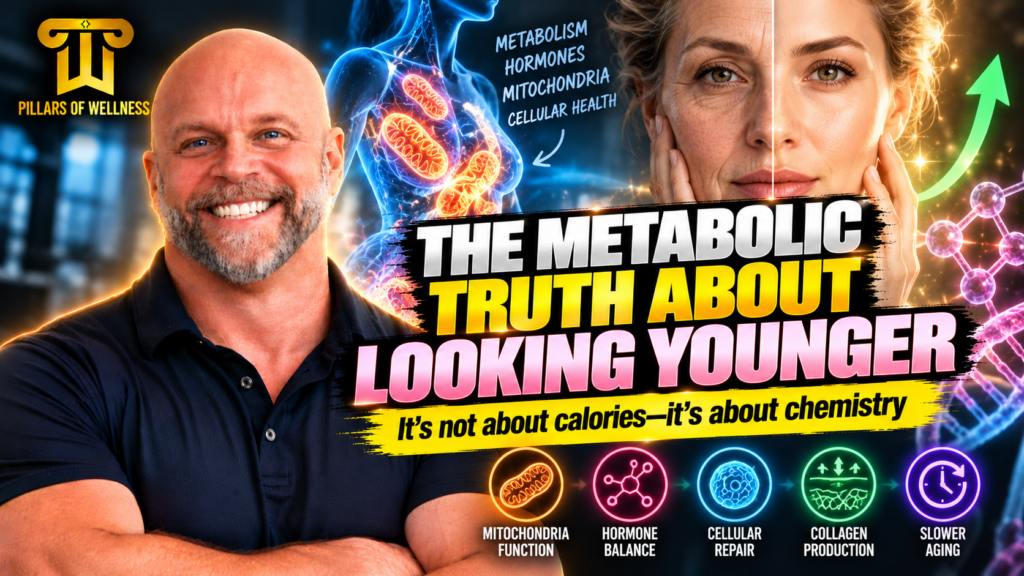
Dr. Chalmers is the founder and Metabolic Wellness Director of Pillars of Wellness in Frisco, Texas. He has spent nearly twenty years treating metabolic, hormonal, and inflammatory problems. He is a TEDx speaker, the bestselling author of Pillars of Wellness, and the host of The Dr. Chalmers Show. National media outlets regularly call on him as an expert in weight-loss medications and peptide therapy.

Dr. Gesik is a board-certified family medicine physician with added qualifications in sports medicine, and a co-founder of IMUA Orthopedics, Sports & Health in Honolulu. She completed her sports medicine fellowship at the John A. Burns School of Medicine and serves as a volunteer team physician for University of Hawaiʻi at Mānoa Athletics. She has been a member of the Institute for Functional Medicine since 2009. Her research career began in muscle physiology, and she has published work on how exercise changes calcium release in muscle.
Dr. Matt Chalmers with Jonathan of NutriDyn, previewing the Great Hawaii Conference 2027. Transcript generated from the video and lightly edited for readability.
Jonathan (NutriDyn): Hello, everyone. This is Jonathan with NutriDyn, and we’re here with Dr. Matt. We’re all super stoked to talk about our upcoming event in Kailua-Kona on the Big Island of Hawaii, on February 20th, 2027, from 8:00 AM to 3:00 PM.
Dr. Matt, I ran into you around the middle of this year, and I was blown away by your knowledge and expertise on peptides, nutrients, and all of these amazing tools we’re now seeing in healthcare. Right away I thought, “We’ve got to have you come out to Hawaii.” We’re really stoked to have you. We see a lot of naturopaths and a lot of chiropractors out here. Maybe you can highlight what to expect at our event.
Dr. Matt Chalmers: The big thing is this. COVID was obviously really bad in a lot of ways, but the silver lining was that people started recognizing they needed to focus on other things for their health. It created a split between simply believing in all the drugs and looking at other alternatives. That’s really where we saw the big explosion of peptides, after 2020. We’d been using them in the bodybuilding and biohacking communities for years before COVID, but there was a big spike afterward.
We’ve heard a lot of things about different peptides, and some of it is overblown or not exactly accurate. What I think people don’t recognize is that hormones and peptides are command molecules. They tell the body, “Do this thing. Run this pathway. Bake me a cake.” And if you’re out of eggs, it’s really hard to bake a cake. The vast majority of the damage we’re seeing from GLP-1s comes from nutrient deficiencies and the way they’re being dosed.
So I can walk through how we’re doing it now, the damage we get from that, and how we fix those problems and move through it more safely. It’s all physiological. GLPs are hormone therapy, because you’re working on GLP, GIP and, in retatrutide’s case, glucagon. Those are all hormonal, built around insulin and glucagon, which are major metabolic hormones.
We’ll also talk about nutrition, glycemic function and the macro-hormonal model. A lot of people are familiar with the calories-in, calories-out model. That model is kind of absurd. The idea that a 60% protein diet and a 60% sugar diet work exactly the same in the body is, I think, hilarious, but that’s what calories-in, calories-out teaches. So we walk people through how the chemistry actually works: why NAD is important, why CoQ10 is important, why people are having all these issues with GLPs. We can explain physiologically what the problem is, and physiologically the way out of it. It should be really fun for anyone interested in using or understanding GLPs and peptides, or who’s already using them a little and wants a cleaner, easier way to use them in practice.
Jonathan (NutriDyn): That’s really needed, because there’s a lot of wild-west information out there. Since you’ve learned this extra piece of using GLPs and addressing all these deficiencies, what results have you seen in patients? What’s the difference between just using the drug and getting all the extra benefits?
Dr. Matt Chalmers: We do it a little differently. I’m big on patients being in charge. If a patient just wants to get the GLP, take it home and run it, it’s their body and their call. But I always tell them they should run it through the entire system, and I have no problem teaching that system to anyone. We do everything we need to make people healthy. We give people an 11-page document on nutrition and how to eat, and a big low-glycemic cookbook, so they have the ability to eat well. One of the things I always tell people is that any time you put somebody on a diet where they don’t get their favorite foods, you’ve created an unsustainable diet. So we figure out how they can have their cookies, cake, pie and ice cream in a chemically safe way, so they still have their foods without the chemical results that destroy them.
As we walk through the GLPs, the things I see causing the biggest issues are nutrient deficiencies: not getting enough protein in, not having testosterone where it’s supposed to be. That’s where we see a lot of muscle wasting, bone loss, sarcopenia, the “Ozempic face” where people say, “They look horrible now.” That’s not very hard to get around as long as you’re using these things properly.
When you use a GLP as part of a system, the way the body actually runs, you say: we’re going to use the GLP to reset insulin function, insulin and glucagon. Then we’ll work on testosterone and estrogen. Then we’ll teach you how to eat, and here’s the supplementation you have to have. You can build a lot of muscle while using GLPs. We do it all the time. I brace my patients for this: the goal is to reach a point where you’re not gaining or losing any weight. They look at me, and I say, “But you’re losing inches.” If we gain five pounds of muscle and lose five pounds of fat, the scale says we haven’t done anything, but you’ve made massive changes in your overall health.
As we get people on that path and teach them about sleep and everything else, their whole health improves, because we’re removing root causes. Insulin resistance is a root cause for a lot of things. We see improvement in PCOS, endometriosis, PMS, type 2 diabetes, dementia and arterial plaque, and we see the risk of heart attack, stroke and cancer reduced, because we’re changing the chemistry of the body. GLPs give us the ability to do things we’ve never been able to do before. It’s a spectacular change.
Jonathan (NutriDyn): Fantastic. Are you going to cover a lot of the pros and cons of taking them?
Dr. Matt Chalmers: Yes. When we get together with providers, there’s always what the book says, and then there’s how it really works in practice. I teach for one of the pharmacies I work with, and it’s really fun talking about hormones with them, because you walk them through it and they say, “That makes so much more sense.” And you say, “Yes, that’s how the body was designed.”
For instance, people say, “I’m worried about cholecystitis and gallbladder issues.” The big issue with GLPs is that you’re shifting the body from using sugar as fuel to using fat as fuel. If this person is an endomorph, or just hasn’t been using fat as fuel very much, they’re not producing a lot of bile. Bile emulsifies fat, but it’s also what we use to encapsulate toxins and flush them out of the body. So if you’re making a little bile and suddenly the body needs a lot more, it’s going to have a hard time.
When we talk about gallstones, I always tell people gallstones aren’t really a thing. It’s like saying, “Here’s my ring, here’s my hand; it’s not a hand ring.” All gallstones are really liver bile stones. The gallbladder is a bag. It doesn’t make anything; it just holds things. Whatever is in the gallbladder came from somewhere, and if you have congealed, dehydrated bile, it came from the liver. So how do we make bile? Amino acids, methyl B vitamins, those kinds of things. How do we get more of those in? Are there supplements, like ox bile or TUDCA, that can soften the blow of the body needing more bile? We’ll run through those.
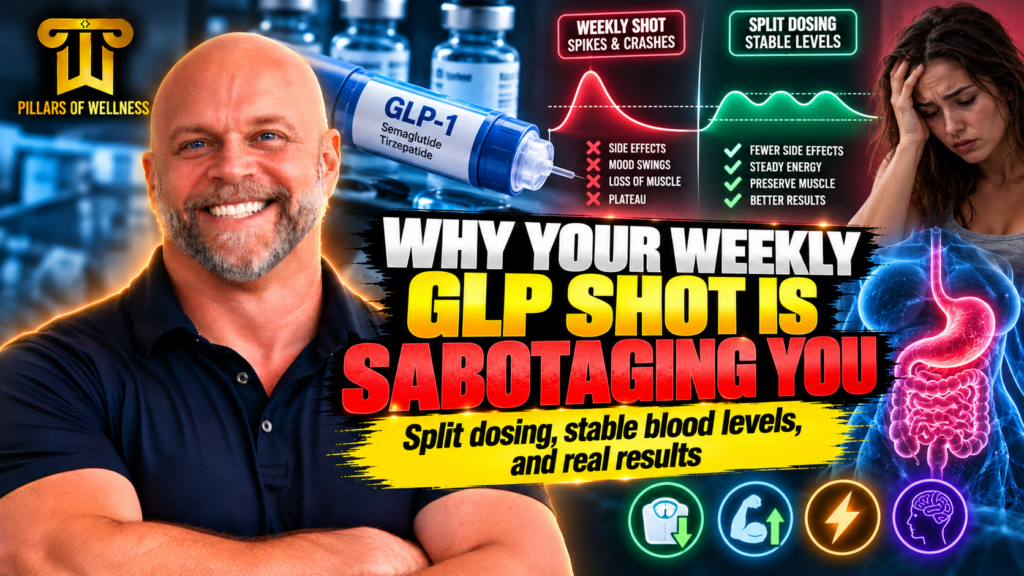
I’ve been doing hormone therapy for a little over 15 years, and I’d recommend you never dose hormone therapy on its half-life. You can talk to guys who do testosterone once a week and ask, “How do you feel on shot day or the day after?” They say, “Amazing.” Then you ask, “How do you feel the day before shot day?” They say, “I’m dragging. It’s terrible.” Testosterone has roughly a seven-day half-life, so if you inject on Monday, by the next Monday half of it is gone. That’s why people drag. With testosterone, you want to dose at least twice a week.
When you look at the damage people are getting from GLPs, it’s almost always the day of, or the day after, a dose increase. You take a dose, wait seven days, and with roughly a six-day half-life, most of it is gone, and then you hit a big bolus again. That’s when the problems arise. If you dose daily, you can walk right up to the point where the patient says, “I’m starting to get nauseous,” and say, “Great, stay right there.” Or if they’re nauseous three days into a six-day cycle, you back them off right away, and you’re glad you didn’t give them twice that amount in a single injection. That’s where we get a lot of the rejections and a lot of the misery: giving way too much at once. The pharmacokinetics of how these work is really important.
Dr. Matt Chalmers: Another thing, which will be good for people who aren’t using retatrutide yet and are waiting on FDA approval: retatrutide has glucagon in it, and glucagon increases gluconeogenesis, so we have to be prepared for that. One of the easiest ways is to increase protein or amino acid intake.
Amino acids all do something. Lysine is phenomenal for viruses; with a cold sore, I’ve seen lysine clear it in a couple of days. Leucine has the highest muscle protein synthesis effect of any amino acid, so if we increase leucine, we increase muscle protein synthesis, which helps with sarcopenia.
There are a lot of things we can do where, if we turn the dial up 5 or 10% on each one, no one notices. It’s not hard. Asking someone to eat an extra 100 grams of protein is a big ask. But if you ask, “Would you drink a smoothie or a protein drink with more amino acids in it?” everybody so far, even the guys who say they’re having trouble eating, says, “Sure, I can do that.” So the question is how we cover all the physiological problems these drugs can create.
Like we talked about at the event in Minnesota, each of these has its own considerations. For example, GLP-1 blunts dopamine function. That’s great if we’re trying to break addiction or quiet food noise, but if you don’t watch it, you can cause depression. If you don’t know how to spot it, block it and reverse it, that becomes a problem for your patients.
Semaglutide, the first GLP-1, is good, but I don’t see a big reason to use it anymore. Tirzepatide, with GLP and GIP, is amazing. Retatrutide, with glucagon added, is unbelievable for metabolic resets. It’s spectacular. So for people who haven’t used it much, it’ll be valuable to sit down and cover what it is, how to use it, what it’s doing, and how to amplify those effects.
Jonathan (NutriDyn): My next question was going to be about differentiating the three GLPs. You already said there’s really no need to use semaglutide anymore, that it’s older technology.
Dr. Matt Chalmers: Semaglutide gives you a lot of GLP-1, and GLP-1 is great. I’m not knocking it in any way; it does great things. The problem is that it doesn’t complete the picture. GLP-1 slows gastric emptying, blunts dopamine, reduces appetite and helps a little with how your body releases insulin.
The GIP we bring in with tirzepatide helps with insulin function and receptor function. So now you have two pieces: we decrease what you’re eating, decrease the addictive drive so you stop eating junk food, help your body use insulin better, and improve the receptor sites. You get a little more balance.
But the big thing behind all of these problems is insulin resistance. Retatrutide adds glucagon, and glucagon suppresses insulin release. If our problem is that we’re making too much insulin and we’re insulin resistant, controlling how much insulin is in the system becomes really important. We’ve seen blood sugars in the 200s that people have struggled with for five or ten years come down in three to five months. Fasting insulin back where it’s supposed to be in three or four months. We’ve dropped A1Cs in the 10s back into the low fives in four or five months. It’s a spectacular tool when everything is used together.
The GLPs are fantastic for that piece, but what people don’t understand is that when you add testosterone and exercise, you’re building new tissue. The number one thing for both fat loss and healing is regenerating tissue. When you’re building muscle, that tissue doesn’t even need insulin or GLUT4 function; it pulls nutrients straight from the blood. So if we’re trying to change insulin resistance, that’s one of the best things you can do.
The problem is that people don’t want to work out because they’ve gotten poor results. I hear it all the time: “I’ve been working out for four or five months and eating really clean.” You look at their diet and it’s pretty solid. You look at their workout and it’s pretty good. Then you look at their testosterone, and for a guy it’s 250 or 300. No wonder they’re not getting results in the gym. Then you see they have sleep apnea and high visceral fat. No diet is going to fix that, because sleep apnea keeps insulin high and makes you insulin resistant. If you don’t understand that, it’s very hard to fix diabetic patients. They go to sleep and spike insulin 40 to 80 times a night, and you’re trying to control their insulin during the day with three meals. You’re never going to win that fight unless you use a tool like retatrutide or tirzepatide to break the cycle, along with a CPAP and the rest.
So when we ask why one person got better so quickly and another didn’t, the problem is usually that we don’t fully understand the macro-hormonal system and what insulin is doing in the body. And this spiral usually isn’t our fault. Our food, water and air carry a lot of toxins, and our stress is through the roof. We end up in chemical positions we can’t break out of, so we have to use these tools to get back to where we’re supposed to be. Once you understand how that works, things start getting better really fast.
Jonathan (NutriDyn): Fantastic. I’m really looking forward to learning about that. One other question: what will women get out of the system you’re teaching? You touched on endometriosis. What improvements are you seeing with your protocols?
Dr. Matt Chalmers: This is one of my favorite things about what I do. When you make women healthier and run this protocol with them, everything in their orbit gets better. Their marriages get better, their husbands get better, their children get better.
I always tell people, “You’re not God. Quit trying to redesign the body. God did a great job designing it. Just go with the original design.” And in the original design, a woman’s primary hormone is testosterone, not estrogen. They have to make testosterone, and then they can aromatize it into estrogen. Women don’t make estrogen. If you don’t understand that, you’ll give them the wrong things, because so many people have been taught that testosterone is a male hormone and not for women, when it’s physiologically the starting point for women.
When you give women testosterone, their energy, sex drive, orgasm function and mental clarity improve, and the “crazy” goes away. Fat starts coming off. Muscle gets rebuilt. Testosterone is what builds bone density, not estrogen. Estrogen works on the osteoclasts and slows bone breakdown; testosterone activates osteoblasts and builds bone back up. So we get all of that function back.
I’ve had a lot of women, once their faculties come back, tell me, “I’m so glad my husband didn’t leave me.” They say, “I was crazy, and I’m surprised no one told me,” because they get so much better.
The way we teach this is a little different from conventional medicine. Medicine has capped women’s testosterone at about 60 or 70, because it treats clitoral engorgement as a negative side effect. I agree we don’t want negative side effects. But I don’t think they asked a single woman, because every woman I’ve asked, “Are faster, easier, more powerful orgasms a good thing or a bad thing?” has said, “I like the orgasms. Let’s make them better.” If you decide that’s something you want, the range changes to roughly 80 to 250. What we’re seeing is that many women who are given testosterone aren’t given enough, because providers are worried about exactly that.
Here’s what happens. When you restore a woman’s energy and mental clarity, and her orgasm function gets really good, she usually wants to be intimate more often, and everything in the marriage gets better. When we work with couples, on day one they’ll sit apart and even lean away from each other. At the three-month mark, they literally pull their chairs closer so they can hold hands or lean toward each other, and they don’t even notice. That’s always how I know. I ask, “How’s your sex drive?” She says, “A lot better,” and he just nods.
People say the two things that damage marriages are sex and money. I see that. But the financial issues get less important when the intimacy is back. When you help the woman and intimacy comes back, the couple starts doing things together and flirting in front of the kids again. The kids see that mom and dad love each other, and that makes the whole house more peaceful. Even if parents aren’t fighting in front of the kids, kids can feel the stress. When mom and dad are in love again, they feel that too. That’s probably the biggest thing we’ve done.
Women’s hormones are not that hard. You start with testosterone and give enough to resolve the testosterone-related issues. Since testosterone naturally converts to estrogen, you then ask about hot flashes, night sweats, vaginal dryness and UTI symptoms. If they’re all gone, great, you don’t need to add estrogen. If they’re 80% better, add a little estrogen and check again. Then talk about sleep, and progesterone’s role in sleep. That’s how you reset women’s hormones.
The caveat, which we’ll get into: say you’ve nailed her hormones and everything is perfect, and then she starts a GLP and loses 20 pounds of fat. That changes things, because a lot of the conversion from testosterone to estrogen happens in fat tissue. Remove the fat tissue, and you reduce that aromatization. So I’ll show practitioners what to watch as that happens and what to ask patients, so you can keep everything properly balanced. We’ve seen phenomenal changes, and it’s a lot of fun. If we focus on helping the women, everyone around them gets better.
Jonathan (NutriDyn): That sounds really cool. Can’t wait for that. In Hawaii we get a wide variety of attendees, a lot of naturopaths and chiropractors, some with more basic functional medicine education and some who are much more advanced. What are the takeaways for people who are newer, and for those who are more advanced?
Dr. Matt Chalmers: The way I like to walk people through it is: here’s what you can take home and use tomorrow, here’s what to watch for, and here’s how to deal with it. Then I’ll give you the chemistry and the physiology of how it works. If you go home and learn the physiology after you’ve learned how to put it together, it all starts to make sense. So it doesn’t matter whether you’ve never heard of these things or you’ve been using them for a while.
I very rarely see people who fully understand how the physiology works. Once you do, you start seeing, “I can use this for that,” or, “This would be a great option here.” Typically we run a metabolic reset when people come in, whether they’re worried about cancer, arterial plaque or just want to feel better. The metabolic reset puts physiology back where it’s supposed to be. I can teach how to do that, and we can go as deep as you want. There’s a whole ocean underneath it. Or, if you’ve never used these before, here’s how to do it, what to watch for, and how to fix 90% of the most common issues. Both groups will get enough out of it to take home and use.
Jonathan (NutriDyn): Fantastic. One last question. Since you’ve been using peptides and this full approach, how has it changed you and your practice?
Dr. Matt Chalmers: Every single day is fun. I’ve always liked what I do, but it’s so much more fun going to work now. I was on a Zoom call with a woman I’m working with; I work with couples quite a bit. Her husband wasn’t on the call, and for five minutes she cried about how much better he is. He’s lost 30 pounds, his sleep apnea is much better, his insulin resistance is down. She said, “He can breathe now. He has so much more energy. He’s back in the gym. He was depressed before, and now he’s not.” That’s very common. She said it looks like he’s taken 20 years off. You can tell when a burden has been lifted from someone. He had been trying. He showed me what he’d been doing, and I felt bad for him, because it wasn’t a bad workout or diet. Half the time I see people, that’s the case. They’re chemically blocked, and there was nothing they could do about it. When we remove those blocks, people start getting better, and it’s so much fun.
I love telling people, “You’re not diabetic anymore.” With blood pressure, I tell patients on medication rated for something like 200 over 110, “Your blood pressure is going to improve pretty quickly, because we’re giving you everything that fixes blood pressure. I need you to take your blood pressure every morning before you take your pill.” Three weeks in, I get emails: “My blood pressure was 140 over 90 today. Am I supposed to take that pill?” And the answer is, check with us before you take it, because if that pill was dosed for 200 over 110 and you’re at 140 over 90, you could pass out. Being able to help people safely walk off blood pressure medications, diabetes medications like Mounjaro and metformin, and other drugs is really fun to watch. We’ll take people off statins as well as we go, and they say, “My joints don’t hurt anymore. I have all this energy.”
Once everyone gets started, a month in they say, “I’m down 15 pounds and I just feel better.” Six weeks in, the testosterone and supplements are kicking in and they’re going to the gym. Two months in, they’ve lost three or four inches around the waist, they’re hitting personal records and getting stronger every day. Every day we’re celebrating new wins.
They also tell their friends. If a guy loses 30 pounds in two months, people notice and ask, “What did you do?” He tells them about the sleep apnea and the whole process, and they say, “You’ve got to hook me up with your doctor.” We get at least one or two calls a day: “You’re working with Ted, his wife told me his sleep apnea’s gone and he’s not snoring anymore. I’ve got to do this.” So from a practice-growth standpoint, it’s been great.
In the morning I get the blood reports back and think, “The last time we drew this guy’s blood, his sugar was 200, and now he’s at 110. This is going to be a fun call.” Those things happen every day. Getting to go to work excited every day is the biggest benefit for me. The money’s great, but every day there are at least one or two calls that are literally life-changing for these people.
Jonathan (NutriDyn): That has to be really satisfying.
Dr. Matt Chalmers: It really is. It’s a lot of fun.
Jonathan (NutriDyn): We’re stoked to have you. Any last thoughts about coming out to Hawaii, or anything the doctors should know?
Dr. Matt Chalmers: Whether you’re an MD, a DC, a naturopath or anything else, we really need to recognize where we are in America. It’s never good to bash our own team, but we need to be honest. Compared with where chronic disease was 30 or 50 years ago, we’re much worse. We’re one of the sickest nations in the developed world. Because we get a lot of cancer, we’ve gotten good at treating it, and we have some of the best three- and five-year cancer survival rates. That’s a bright spot. But we have very high rates of obesity, diabetes, metabolic syndrome, Alzheimer’s and dementia. The great majority of the big chronic health issues we’re seeing are driven by diet and lifestyle: insulin resistance, low hormones, low nutrient status. Those are things you can address with this process.
So we have to recognize that whatever system we’ve been using isn’t good enough. Our surgeons are amazing. Our emergency medicine is unbelievable; they perform miracles all the time. But in chronic health, we’re doing terribly, because nobody is addressing sleep, hormones, supplementation and exercise, or asking where the body was physiologically designed to be and how to get back there. As soon as we recognize that, we’ll do a lot better.
There’s a lot to say about the chemicals in our food, water and air, the nutrient deficiencies from depleted soils, the critical need for nutrition, and how much better people run when you give their bodies what they’re supposed to have. We’ll go through the real problems we’re seeing. We know type 2 diabetes and dementia are strongly linked to insulin resistance. How do we fix that? Here’s how. We know arterial plaque is driven by certain factors. How do we reduce them?
My favorite is when people say, “It’s cholesterol.” And I’m like, “That’s the dumbest thing I’ve ever heard.” I have 50 patients with so-called high cholesterol and no plaque, and 20 or 30 patients whose cholesterol has been perfectly in range their whole lives, and their CT angiograms show 60 or 70% plaque. Why? It’s not because they have cholesterol. It’s because something is damaging the cholesterol. Here’s the list of things that damage it. How many of you are talking about fasting insulin, fasting glucose, A1C, sleep apnea, dental infections, gut issues and psychological stress? Most people say they’re not. Most patients will tell you, “I snore,” or “I don’t sleep well.” I ask, “How many of your doctors have ordered a sleep study?” And they say, “None.” Sleep is one of the most important pieces of your overall health, it can wreck your metabolic and psychological health, and nobody has done anything about it.
Once you recognize the problems, the things that fix them, and the fact that we’re not doing those things, and you start doing them, practice gets easier, the money gets easier and everything gets more fun. And you can take it home and use it the next morning. Take sleep studies: if you’re not doing them, they’re easy now. The patient puts on a ring, downloads the app, hits start, goes to sleep, hits stop in the morning, does that two nights in a row, and ships the ring back. It’s all digital and goes straight to the sleep specialist, and you get a full sleep report. It’s like an MRI; you don’t have to read it yourself. The report tells you the problem and how to fix it, and you’ve just taken a massive problem off that person’s plate. We’ll go through tools like these, because they meet real physiological needs, and it’s really cool to bring them back into your practice.
Jonathan (NutriDyn): Fantastic. Like I said, we’re stoked to have you. This is our fifth annual Great Hawaii Conference, and it’ll be the first one held right on the ocean, about 20 feet from the water. We’ll have a 20-by-40 tent and a big 100-inch TV for your slides. We’ll be in aloha shirts, on the grass, with great Hawaiian food. At the end of the day, there’s an optional catamaran that will pick us up for some history and drinks in the evening. Again, the details: February 20th, 2027, from 8:00 AM to 3:00 PM. What’s the best way to find you?
Dr. Matt Chalmers: The easiest way is social media, @DrChalmers1, or my website, pillarsofwellness.com. Either one, you can usually reach me pretty easily.
Jonathan (NutriDyn): All right, my friend, as we say, aloha. We’ll see you February 20th.
Dr. Matt Chalmers: I’m looking forward to it. It’s going to be a good time.
This interview reflects Dr. Chalmers’ clinical experience and is intended for healthcare practitioners. It is not medical advice. Patients should work with a licensed provider before starting or changing any medication, hormone or peptide therapy.
This event is hosted by NutriDyn, PO Box 219, Maple Plain, MN 55359-0219.
NutriDyn Website:
nutridyn.com
Enjoy a relaxing evening along the beautiful shores of Kona. Take in the breathtaking sunset while enjoying drinks, dinner, and time with colleagues. This is an optional event; separate registration is required.
Interested in having Dr. Matt Chalmers speak at your next event, conference, or professional gathering?